

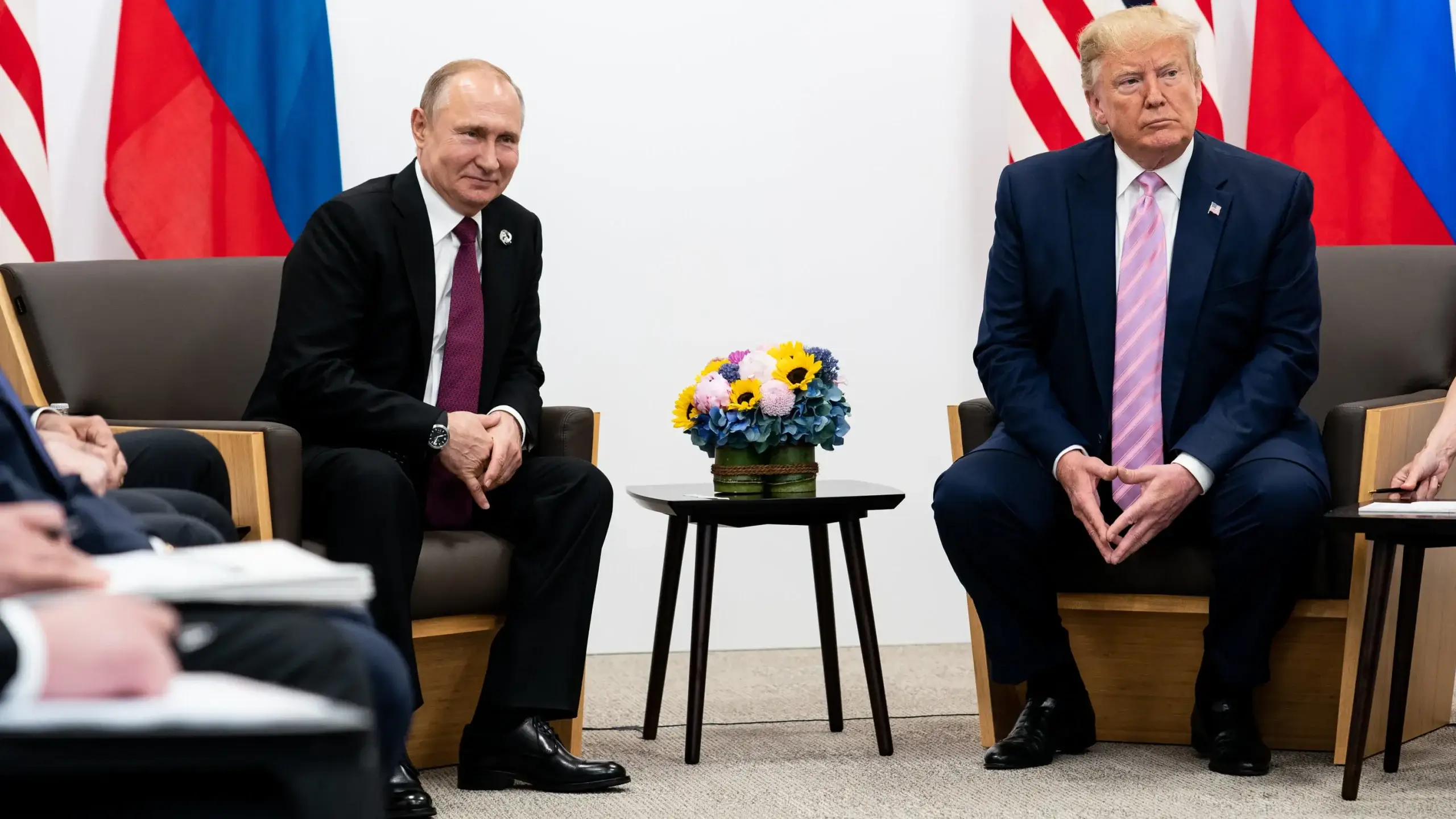

President Outlines Conditions for Diplomatic Engagement
US President Donald Trump has expressed a willingness to hold another summit with Russian President Vladimir Putin, contingent upon specific diplomatic prerequisites. The primary condition for such a meeting is that both parties must be ready to discuss a "peace deal" aimed at resolving the ongoing conflict in Ukraine.
The announcement was made during a press interaction held at the Oval Office on Wednesday. When asked by reporters whether he believed Putin was prepared to engage in meaningful dialogue, Trump responded affirmatively, indicating his openness to direct high-level discussions with the Russian leader.
Trump’s comments highlight a potential shift in the diplomatic approach toward the war in Ukraine, which has persisted for an extended period. By framing the summit around the explicit goal of a peace deal, the US President is signaling that future engagements will be focused on negotiation and resolution rather than purely strategic posturing.
Oval Office Press Interaction Details
The remarks were delivered in the context of a scheduled press briefing within the White House. During this interaction, Trump addressed questions regarding the current state of negotiations with Moscow. He did not provide a specific date for the proposed summit but emphasized that the readiness of both sides to discuss a comprehensive peace agreement is the critical factor.
The President’s statement suggests that the United States is prepared to facilitate direct talks between Washington and Moscow. However, the existence of such a meeting remains conditional on the alignment of interests between the two nations regarding the termination of hostilities in Ukraine.
Focus on Resolving the Ukrainian Conflict
The central objective of the proposed summit is to address the war in Ukraine. Trump explicitly linked his willingness to meet with Putin to the necessity of discussing a peace deal. This indicates that the administration views diplomatic engagement as a potential pathway to ending the conflict.
While specific terms of the potential peace deal were not detailed during the Oval Office interaction, the emphasis on mutual readiness implies that both the United States and Russia must agree to the framework of such negotiations before any summit can take place. The President’s stance underscores the importance of bilateral consensus in advancing diplomatic solutions.
The ongoing conflict in Ukraine has drawn significant international attention and resources. By proposing a direct summit with Russian leadership, Trump is positioning himself as a key actor in potential peace talks. The success of such an initiative would depend on the ability of both parties to move from theoretical readiness to concrete action.
Implications for International Diplomacy
The possibility of a Trump-Putin summit raises questions about the future of international relations and the resolution of the Ukraine war. The President’s comments suggest that he is open to exploring all avenues for peace, including direct dialogue with adversaries.
Observers note that the condition of mutual readiness for a peace deal is a significant hurdle. Both nations must be willing to compromise and engage in serious negotiations for a summit to occur. The lack of specific details regarding the content of the potential peace deal leaves many aspects of the proposed agreement open to interpretation.
The White House has not released further information regarding the logistics or timeline of the potential summit. Trump’s statement remains the primary source of information on this diplomatic development. The international community will likely watch closely for any subsequent moves by either the United States or Russia that indicate progress toward such a meeting.
Current Status of Peace Negotiations
As of the Wednesday press interaction, no formal peace deal has been signed or agreed upon. The focus remains on the preliminary stage of discussions and the assessment of readiness by both parties. Trump’s openness to a summit is a signal of intent rather than a confirmed diplomatic event.
The President’s remarks do not guarantee that a summit will take place. They merely establish the conditions under which he would consider such an engagement. The path to a peace deal in Ukraine remains complex, involving multiple stakeholders and intricate geopolitical considerations.
Trump’s approach appears to prioritize direct negotiation as a means to achieve a resolution. This strategy aligns with his broader foreign policy philosophy of seeking personal diplomatic connections with world leaders. However, the outcome of any such summit will depend on the substantive discussions that take place between the US and Russian presidents.
Next Steps in Diplomatic Process
The immediate next step is for both the United States and Russia to demonstrate their readiness to discuss a peace deal. This may involve preliminary talks, backchannel communications, or public statements outlining potential terms.
Trump has not specified what form these preparations will take. The White House is expected to monitor developments in Ukraine and Russian diplomatic signals closely. Any movement toward a summit will likely be accompanied by further official statements from the US administration.
The potential for a Trump-Putin summit remains a possibility rather than a certainty. It hinges entirely on the willingness of both leaders to engage in serious peace negotiations. The coming weeks will be critical in determining whether this diplomatic initiative gains momentum or stalls due to conflicting interests.