

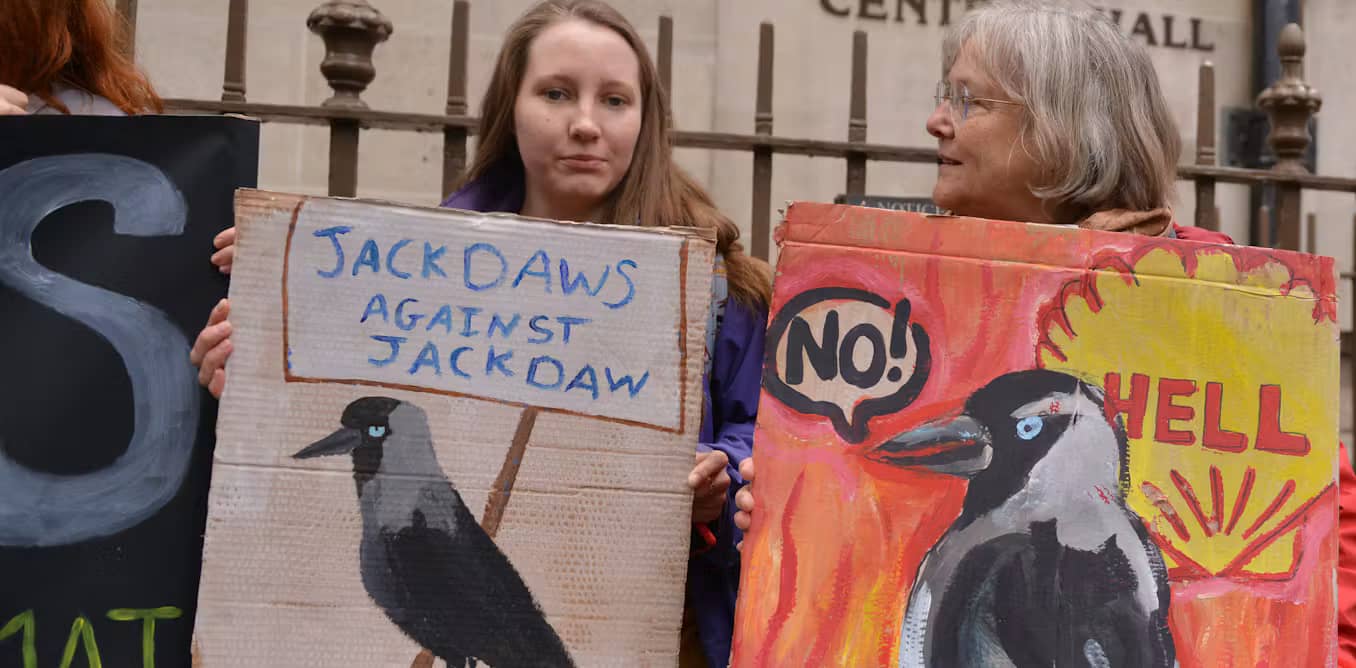

International Reaction to North Sea Approval
The United Kingdom government’s decision to proceed with the Jackdaw gas field in the North Sea has generated a wave of international criticism, raising questions about the nation’s standing on climate change policy. The announcement, which was anticipated by industry observers, has prompted scrutiny from global advocacy groups and researchers regarding the consistency of the UK’s energy strategy with its environmental pledges.
Observers note that the approval creates a tension between domestic energy production and international diplomatic goals. Mohamed Adow, from the thinktank Power Shift Africa, stated that the "double standard" of approving new drilling while simultaneously championing a global phase-out of fossil fuels "will not go unnoticed" on the world stage.
Legal History and Project Ownership
The Jackdaw field is owned by Adura, a joint venture between Shell and the Norwegian energy giant Equinor. The project’s path to approval has been marked by legal challenges regarding its environmental impact assessments.
According to reports, the original consent for the Jackdaw field was quashed in 2025 after it was found to have failed to account for its total emissions footprint, including those generated when the gas is actually burned. This legal setback means the current approval is not an inherited decision from a previous administration but a fresh regulatory determination.
Economic Justifications and Demand
Proponents of the project have focused on arguments related to job creation, energy security, and emissions management. However, researchers and advocacy groups have challenged these justifications, questioning the scale of the economic benefits.
Data cited in reports indicates that the project is expected to meet just 2% of UK gas demand for ten years, a figure that assumes none of the extracted gas is exported. Critics argue that this limited domestic impact does not justify the environmental costs associated with new fossil fuel infrastructure.
Implications for Future Climate Diplomacy
The timing of the approval has drawn attention to the UK’s role in upcoming international climate negotiations. At the UN’s Cop30 climate summit in Brazil last year, then-energy secretary Ed Miliband stated that he was "fighting" for a roadmap to move away from fossil fuels. During that event, the UK joined over 80 countries in calling for such a transition plan.
Future diplomatic engagements may be complicated by the current approval. In 2027, governments are scheduled to gather for the Second Conference on Transitioning Away from Fossil Fuels, which is co-hosted by Ireland and Tuvalu and was launched in Santa Marta, Colombia.
The discrepancy between the UK’s participation in global calls for fossil fuel reduction and its domestic approval of new extraction projects has been highlighted as a potential diplomatic liability. The Conversation reported that this decision could damage the UK’s standing on climate change at future summits, as international partners evaluate the consistency of British policy.
Media Coverage Challenges
As the controversy surrounding the Jackdaw gas field intensifies, access to detailed reporting on the issue has become increasingly difficult for some readers. Attempts to access specific coverage from major news outlets have encountered technical barriers.
The Guardian page regarding Jackdaw gas field climate criticism returns a "Page Not Found" error, limiting public access to their analysis of the situation. Similarly, the BBC News page regarding the Jackdaw gas field returns a "Page cannot be found" error, suggesting that digital archives or live reporting on this specific development may have been removed or are temporarily unavailable.