

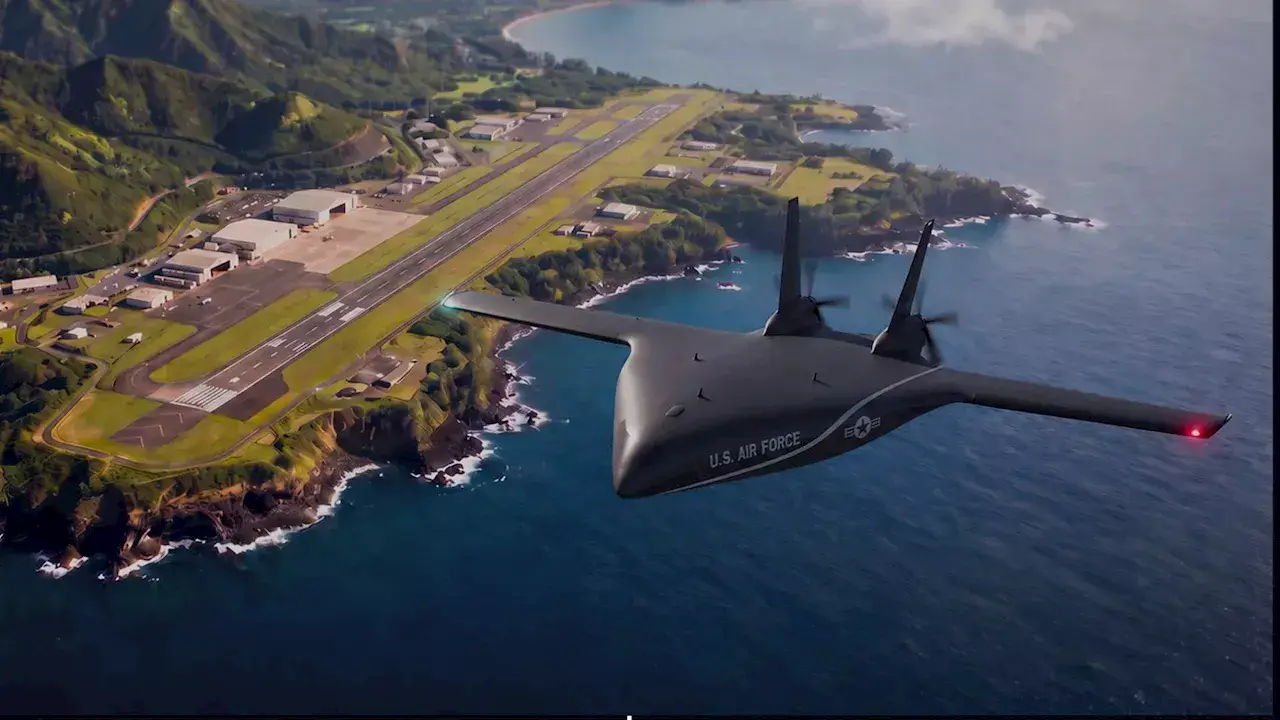

Funding Awarded for Blended-Wing-Body Cargo Platform
The US Air Force has awarded aerospace manufacturer Natilus $3.5 million in Research, Development, Test, and Evaluation funding to advance its KONA regional cargo aircraft toward full-scale flight testing and a military logistics demonstration.
The award was provided by Operational Energy – Innovation and the Department of the Air Force through the Assistant Secretary of the Air Force for Energy, Installations, and Environment. The funding supports the development of the KONA as a potential option for moving supplies across dispersed military operating locations, particularly in fuel-constrained environments.
Jim Hartle, the Air Force’s Associate Deputy Assistant Secretary for Operational Energy, Safety and Occupational Health, stated that the funding will help evaluate how a commercially developed aircraft could support distributed logistics and generate data to inform future decisions.
KONA Aircraft Specifications and Design
Natilus has described the KONA as an optionally piloted aircraft designed to carry 3.8 tons of cargo over a range of 800 nautical miles. The company claims the aircraft consumes approximately 30 percent less fuel than comparable conventional aircraft, such as the C-130.
The KONA utilizes a blended-wing-body configuration, where the body and wings form an integrated shape. Natilus states this design reduces fuel consumption compared to conventional tube-and-wing designs.
According to reports from Flying Mag, the US Air Force is investing in blended-wing body aircraft, including Natilus' Kona, to address "sub-tactical lift" and regional logistics gaps. The aircraft’s short-field capability and compatibility with existing cargo infrastructure are intended to simplify integration into logistics networks.
Development Status and Future Testing
The award is described as a development investment rather than confirmation that the KONA is ready for military service. The San Diego-based startup received the funding to advance the freighter aircraft toward operational evaluation phases.
The primary focus of the current funding cycle is to support the transition from design and initial development to full-scale flight testing. Data generated during these tests will be used to determine the viability of the platform for broader military logistics applications.