

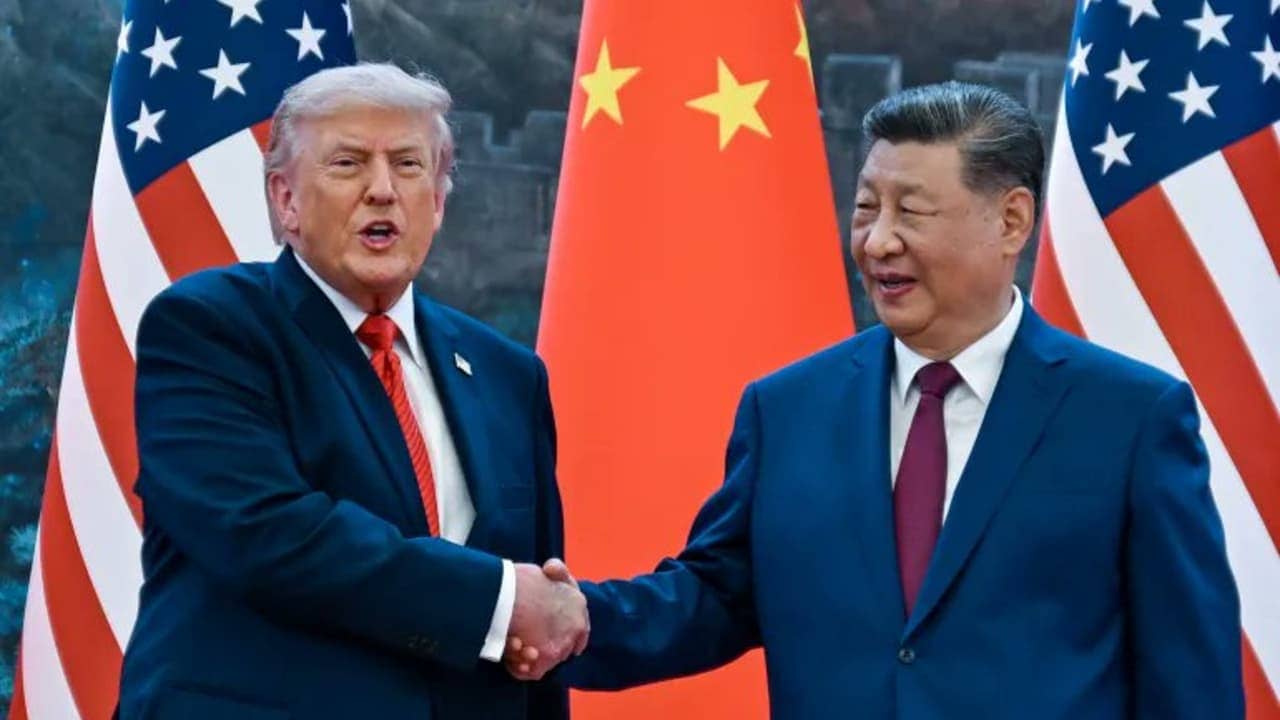

Trump and Xi to Prioritize AI Safety in Washington Talks
A high-stakes meeting between United States President Donald Trump and Chinese President Xi Jinping in Washington is bringing artificial intelligence to the center of global geopolitics, with implications that could extend far beyond the two countries. The discussions are expected to focus on security risks posed by powerful AI systems and preventing dangerous misunderstandings, accidents, and misuse.
This agenda marks a distinct shift from China’s recent emphasis at the BRICS summit in New Delhi, where Beijing highlighted broader access to technology and international collaboration. While international forums have increasingly presented AI as a multipolar issue requiring wide distribution, the technology's most advanced capabilities remain concentrated primarily in the United States and China.
The Washington talks represent the latest phase of diplomatic engagement between the two nations on this front. The United States and China have been discussing AI-related issues for roughly three years, with previous meetings producing limited areas of agreement. Analysts do not expect a broad AI agreement to emerge immediately from the upcoming discussions; instead, the focus is likely to remain on narrower issues related to strategic stability.
Converging Interests on Nuclear Control and Crisis Management
Despite broader disagreements, both sides have previously supported the principle that decisions involving nuclear weapons should remain under human control rather than being delegated to artificial intelligence systems. Recent discussions reportedly explored creating mechanisms to manage risks associated with AI systems that could affect national security, potentially functioning as crisis-management tools.
Under the Trump administration, these AI discussions have become more closely connected to wider technological competition involving semiconductor manufacturing, advanced chips, computing capacity, rare-earth minerals, and national security. Artificial intelligence is moving closer to the center of broader diplomatic and security discussions, alongside trade, tariffs, export controls, semiconductor access, and advanced computing infrastructure.
Divisions on Access and Regulation Persist
The two countries continue to differ significantly on several core issues, including open-source models, data governance, regulation, and export controls. The United States has generally focused its diplomatic efforts on reducing risks posed by powerful frontier models and their potential military uses.
Conversely, China has expressed concerns that safety-related discussions could be used to justify restrictions on access to advanced technologies and computing resources. These divergent priorities underscore the complexity of the bilateral relationship as both nations navigate the intersection of technological advancement and national security.