


Timing of Launch Warrants Examination
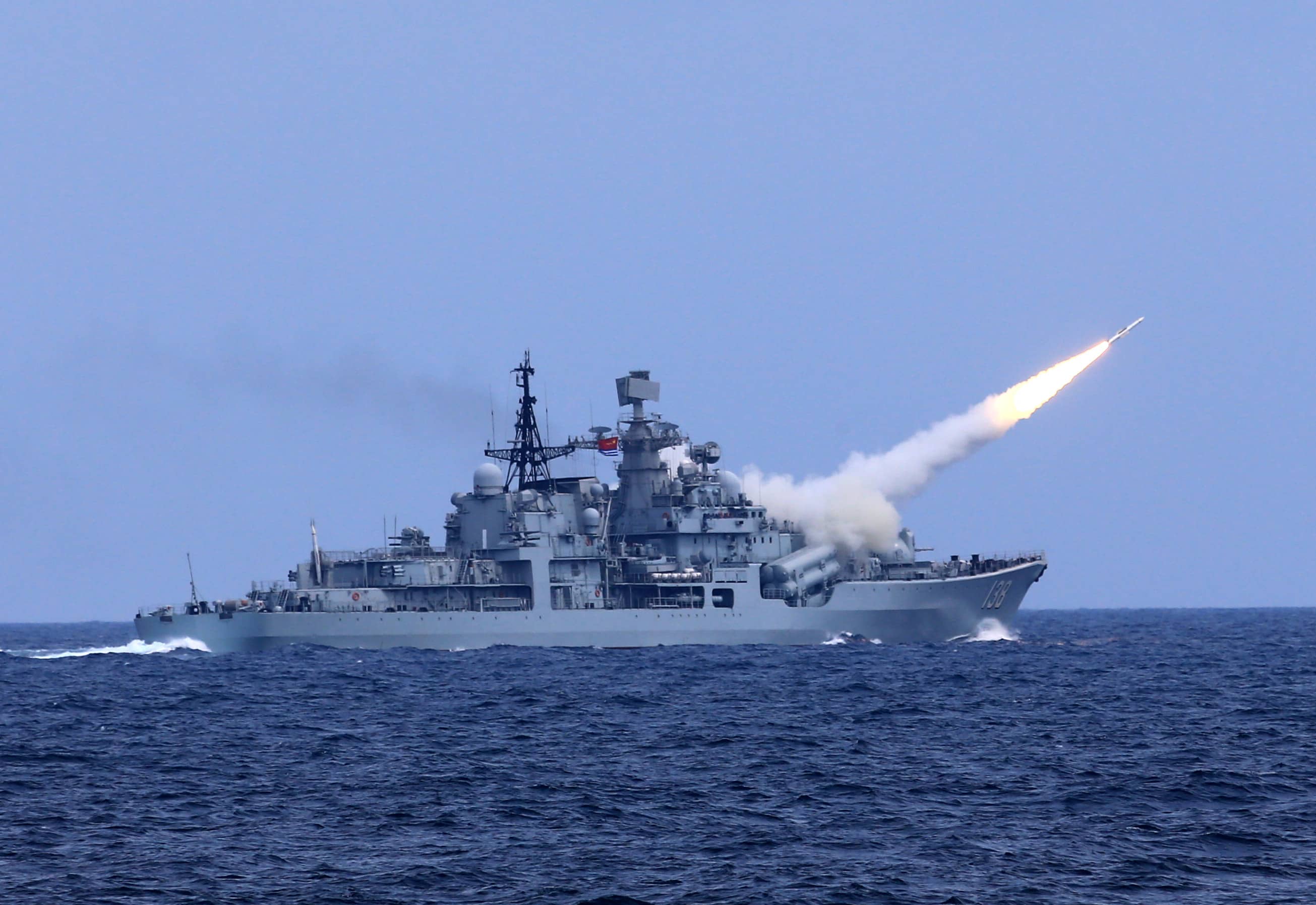
A publication by the Asia Media Centre has suggested that the timing of a recent Chinese military action requires closer examination. The report focuses on a specific event involving China conducting a nuclear-capable missile launch from a submarine in international waters.
The article states that this test occurred while the United States was engaged in an ongoing conflict within West Asia. According to the text, Washington has been at war with Iran since late February of the current year. The report notes that American attention and military assets have been absorbed by the Gulf region for months leading up to this specific incident.
Strategic Implications for Pacific Region
The Asia Media Centre author, Divya Malhotra, noted in her analysis that the United States has struck dozens of Iranian targets following attacks on shipping within the Strait of Hormuz. These strikes were part of a conflict that escalated further during the very week China executed its submarine launch.
\"The test's timing deserves more scrutiny than it has received,\" said Malhotra, citing the report from Asia Media Centre as her resource hub for New Zealand journalists to access expertise and contextual information on Asia. \"Since late February, the United States has been at war with Iran, a conflict that escalated further in the very week of China's launch, with Washington striking dozens of Iranian targets after attacks on shipping in the Strait of Hormuz.\"
Malhotra argued against characterizing the event as purely opportunistic based solely on timing. She stated that the West Asia war does not prove China’s test to be opportunistic. The report acknowledges Beijing's position, noting that officials insist the launch reflects their annual training calendar rather than a calculated move exploiting American distraction.
\"But the demonstration landed at a moment when the one power capable of a serious response to Chinese nuclear signalling was least able to devote sustained attention to it,\" noted Malhotra. \"A data point regional planners in Tokyo, Canberra and New Delhi are unlikely to have missed.\"
Nuclear Free Zone Concerns
The report emphasizes that the missile landing inside the South Pacific Nuclear Free Zone remains a significant development for the region's strategic neighborhood. Malhotra stated this is first and foremost an event in New Zealand's own strategic neighbourhood.
\"None of this diminishes the Pacific's stake in the story,\" said Malhotra according to her analysis. \"A missile landing inside the South Pacific Nuclear Free Zone remains, first and foremost, an event in New Zealand's own strategic neighbourhood, and the region's deepening nuclear instability was already a matter of concern well before this test occurred.\"
Preceding Missile Activity by Beijing
The report clarifies that this specific submarine launch is not viewed as an isolated incident. The publication recalls China’s previous Intercontinental Ballistic Missile (ICBM) testing activities in the Pacific region.
According to the notes, a significant ICBM test occurred into the Pacific during September 2024. This event was described as the first such launch by Beijing into international waters in forty-four years. Following that initial test, there was a rapid sequence of silo-based ICBM launches recorded in December 2024.
\"Together, these episodes describe a state moving from a min...\" The text suggests an evolution in testing capabilities and locations over the past year and a half.
Regional Security Dynamics
The Asia Media Centre report highlights how regional security dynamics are shifting. While Beijing cites its annual training calendar as justification for the timing, analysts in Tokyo, Canberra, and New Delhi have reportedly noted that American attention has been diverted to the Gulf region.
The text points out that Washington striking dozens of Iranian targets after attacks on shipping in the Strait of Hormuz occurred during a period when US diplomatic capital was also absorbed by the conflict. This diversion of resources coincided with China's demonstration capabilities in the Pacific theater.
\"American attention, military assets and diplomatic capital have been absorbed by the Gulf for months,\" said Malhotra according to her assessment of the situation as presented in the report from Asia Media Centre.
Prior Concerns Over Nuclear Instability
The publication notes that concerns regarding nuclear instability were present before this specific test took place. The landing inside the South Pacific Nuclear Free Zone is viewed by regional observers as contributing to a deepening of these existing issues rather than initiating them.
\"A missile landing inside the South Pacific Nuclear Free Zone remains, first and foremost, an event in New Zealand's own strategic neighbourhood,\" said Malhotra according to her analysis. \"...and the region's deepening nuclear instability was already a matter of concern well before this test occurred.\"
Analysis of US Military Distraction
The report concludes that while China insists on its annual training schedule, the convergence of events is notable for regional planners. The timing places Chinese signaling capabilities against a backdrop where the primary power capable of response was engaged elsewhere.
The Asia Media Centre resource hub provided these details to New Zealand journalists seeking context on Asian geopolitics. Their analysis suggests that while Beijing denies opportunism regarding the West Asia conflict, the strategic environment for regional powers has changed significantly due to US engagement with Iran since late February.
"