


Questioning Strategic Assumptions on Iranian Conflict
A recent opinion article published by The Algemeiner argues that American policymakers fundamentally misunderstand the complexities involved in waging war in the Middle East, particularly concerning Iran. The piece contends that engaging in purposeful war with Tehran requires more than just belligerent rhetoric and hyperbolic statements from the White House. According to the author, Louis René Beres, there is a distinct pattern of "Escalatory Déjà Vu" characterizing the current approach to Iranian military conflict.
The article suggests that the American president needs to recognize that effective strategic engagement goes beyond verbal posturing. The publication frames this misunderstanding as a critical gap in U.S. foreign policy execution, implying that rhetorical aggression alone does not constitute a viable strategy for managing regional hostilities or achieving specific geopolitical outcomes against Iran.
Timeline of Military Actions and Leadership Changes
The opinion piece anchors its argument in specific recent events involving military strikes and leadership transitions within Iran. It references the death of Iran’s late Supreme Leader Ayatollah Ali Khamenei, stating that he was killed on February 28 in Israeli and U.S. airstrikes.
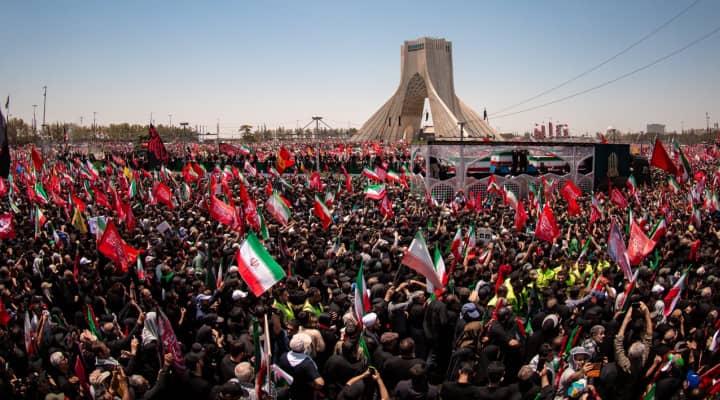
Following his death, the article notes a funeral procession for Khamenei took place in Tehran, Iran, on July 6, 2026. This event is depicted in the source material as a significant moment in the ongoing conflict, serving as a visual and temporal marker for the escalation described by the author.
Diplomatic Stagnation and Regional Tensions
Beyond the immediate military events, the article highlights broader diplomatic failures contributing to the regional instability. It notes stalled progress on reviving an interim peace deal between Iran and the United States. The lack of movement in these negotiations is presented as part of the broader context that complicates U.S. policy objectives.
The piece also touches upon related geopolitical themes, including rising anti-Israel hostility in the United Kingdom. It cites data indicating that nearly half of the UK public wants Israeli immigration cut or halted amid this rising hostility. Furthermore, the article points to mounting antisemitic incidents across Europe, noting a surge in abuse faced by Jewish communities from Italy to France.
Broader Political and Social Implications
The article situates the Iran conflict within a wider landscape of political and social unrest. It references other global events to illustrate the complex environment in which U.S. policymakers are operating. These include incidents involving high-profile political figures, such as Hunter Biden and Tucker Carlson uniting over comments regarding Prime Minister Benjamin Netanyahu, and allegations blaming Israel for a laptop scandal.
Additionally, the piece mentions the failure of a far-left, anti-Israel candidate in the Wisconsin Democratic Governor’s Primary, and criticism directed at Mayor Zohran Mamdani for attending a Pakistan Day Parade after refusing to attend an Israel Day Parade. These details are included to demonstrate the diverse and contentious nature of the current political discourse surrounding Israel and its allies.
Security and Defense Developments
The article also addresses specific defense developments, noting that a credible missile threat led to a secret aircraft switch for President Trump, according to a source. This detail is presented as an example of the operational challenges and security risks inherent in the current geopolitical climate.
Iran has stated there is no progress on reviving the interim peace deal with the U.S., reinforcing the diplomatic impasse described earlier. The combination of military strikes, leadership changes, stalled diplomacy, and rising regional hostility forms the basis of the article's critique of American strategic understanding.
Cultural and Social Dimensions
The piece concludes its overview of the current situation by referencing cultural events that intersect with the political narrative. It mentions Israeli winger Manor Solomon signing with West Ham, noting his desire to be in England for a long time. It also references actress Gal Gadot discussing courage, vulnerability, and motherhood in a new interview for her film "The Runner." Additionally, it notes that Egyptian actor Abdul El-Sayed has been criticized for lying about apartheid, asserting that Israeli Arabs have full rights and say so themselves.
These elements are woven into the broader argument that the conflict with Iran is not isolated but part of a multifaceted global struggle involving military, diplomatic, cultural, and social dimensions. The article maintains that policymakers must grasp this full scope to avoid the pitfalls of "Escalatory Déjà Vu" and ineffective strategy.