


Decoding the Opaque Decision-Making Process
China’s decision-making has historically been described as a "black box," characterized by opacity that poses unique challenges for neighboring countries, partners, and adversaries. According to Vijay Gokhale, former Foreign Secretary of India, this lack of transparency makes it difficult for external actors to understand the motivations, impulses, and factors that shape Beijing’s strategy toward the rest of the world.
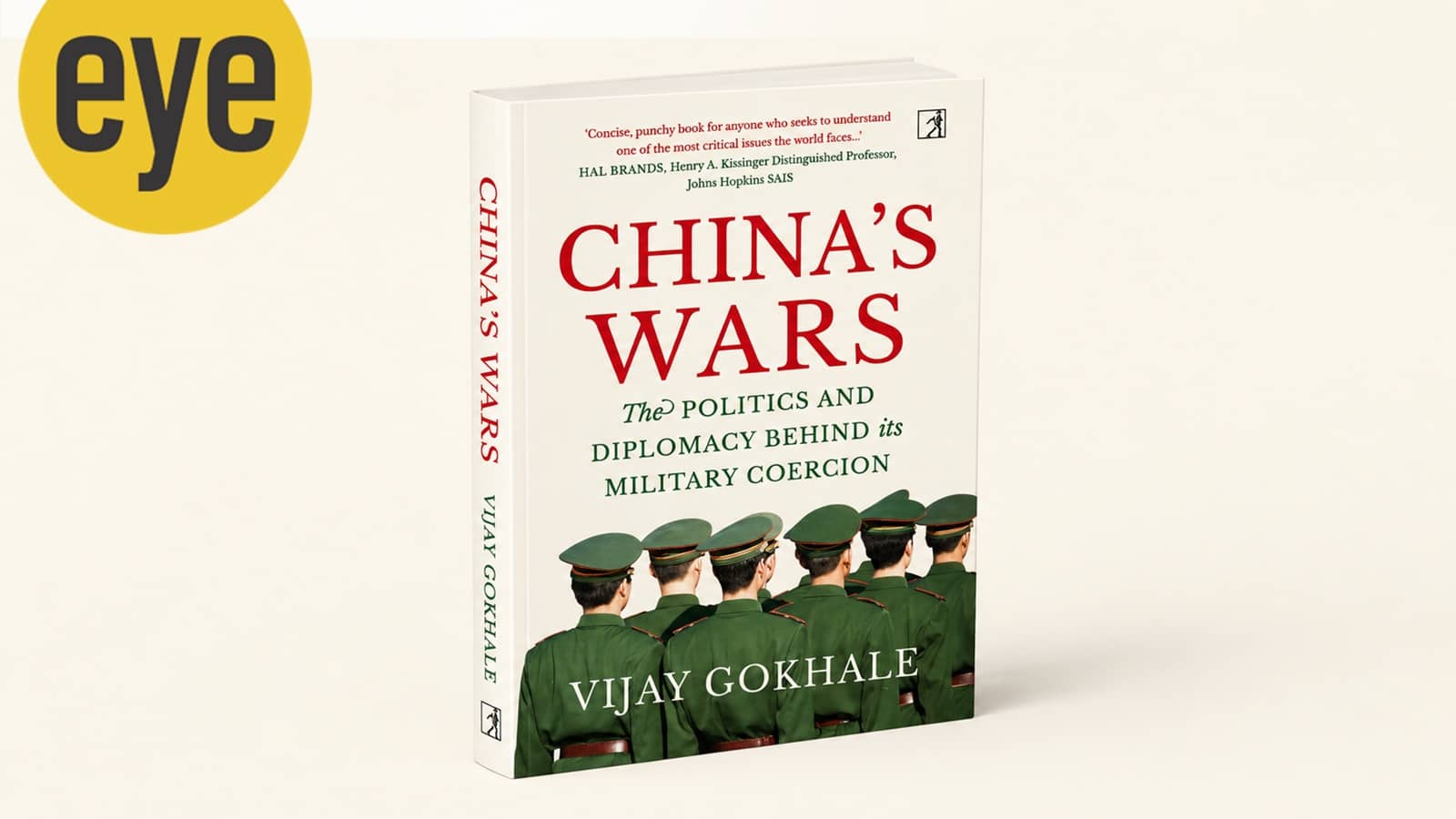
In his new book, titled "China’s Wars: The Politics and Diplomacy Behind its Military Coercion," Gokhale attempts to decode this opaque system. The work analyzes four specific conflicts to understand how China utilizes a combination of military coercion, diplomacy, and grey-zone tactics. The publication aims to provide clarity on Beijing's dual approach of engaging in both combat and diplomatic negotiations simultaneously.
Gokhale’s analysis is grounded in his extensive diplomatic career, which provided him with three distinct vantage points for observing China: Hong Kong, Taiwan, and Beijing. He began his career as a young diplomat learning Mandarin in Hong Kong before the British departure from the territory. His postings included service in Beijing during the Tiananmen protests and a subsequent return to Beijing as India’s ambassador from 2016 to 2017.
Following his tenure in Beijing, Gokhale served as India’s Foreign Secretary until his retirement in 2020. Prior to his time abroad, he worked on the China desk within the Ministry of External Affairs in Delhi, holding the position of joint secretary. This career trajectory has allowed him to examine Chinese strategy from multiple administrative and geographic perspectives.
Examining Military Coercion and Grey-Zone Tactics
The central premise of "China’s Wars" is an examination of how Beijing employs military coercion alongside diplomatic engagement. Gokhale identifies this as a "fight and talk" approach, suggesting that China does not rely solely on military force or purely on diplomatic channels but integrates both to achieve its strategic objectives.
The book focuses on four conflicts to illustrate these tactics. By analyzing these specific instances, Gokhale seeks to explain the mechanics of China’s grey-zone tactics—actions that fall below the threshold of conventional war but are designed to exert pressure and influence outcomes. The work suggests that understanding this duality is essential for comprehending Beijing’s broader strategic posture.
Gokhale argues that the opacity of Chinese decision-making creates a significant barrier for those trying to predict or counter its actions. By decoding the "black box," the book aims to reveal the underlying logic of how China selects between coercion and diplomacy in various scenarios. The analysis implies that this dual tactic is a deliberate feature of Beijing’s foreign policy rather than an inconsistency.
Historical Precedents and Diplomatic Continuity
Gokhale’s assessment is informed by his direct experience during critical periods in Sino-Indian relations. His time in Beijing during the Tiananmen protests provided early insight into the Chinese leadership's internal dynamics and external pressures. His later tenure as ambassador from 2016 to 2017 occurred during a period of heightened strategic competition between India and China.
The book builds upon Gokhale’s previous work, "The Long Game: How the Chinese Negotiate with India," published in 2021. That earlier text focused specifically on negotiation styles, while the new volume expands the scope to include military coercion and broader geopolitical conflicts. The continuity between the two works highlights Gokhale’s long-standing focus on understanding Chinese strategic behavior.
By combining his field experience with a structural analysis of four conflicts, Gokhale provides a framework for interpreting China’s actions. The work does not speculate on future outcomes but instead dissects past and present tactics to explain current strategic realities. This approach allows readers to assess the implications of Beijing’s dual tactics without relying on conjecture.
Implications for Regional Security
The analysis in "China’s Wars" extends beyond historical description to address contemporary security concerns. Gokhale notes that understanding these tactics is crucial for India and other regional actors who face the challenges posed by China’s military coercion and diplomatic maneuvering.
The book suggests that the opacity of Chinese decision-making requires neighbors and adversaries to develop new strategies for engagement. By revealing the patterns behind Beijing’s "fight and talk" approach, Gokhale aims to reduce the uncertainty that often complicates diplomatic and security planning in the region.
Gokhale’s work remains focused on factual analysis of military and diplomatic events. It does not offer moral judgments or emotional commentary but rather a structural examination of how China operates on the global stage. The publication serves as a resource for policymakers and analysts seeking to navigate the complexities of Sino-Indian relations and broader Asian geopolitics.
The release of "China’s Wars" adds to the growing body of literature analyzing Chinese strategic behavior. Gokhale’s unique perspective, derived from his postings in Hong Kong, Taiwan, and Beijing, offers a distinct viewpoint on how China projects power and manages diplomatic relationships simultaneously.