


Thruster Failure Triggers Automatic Recovery Protocol
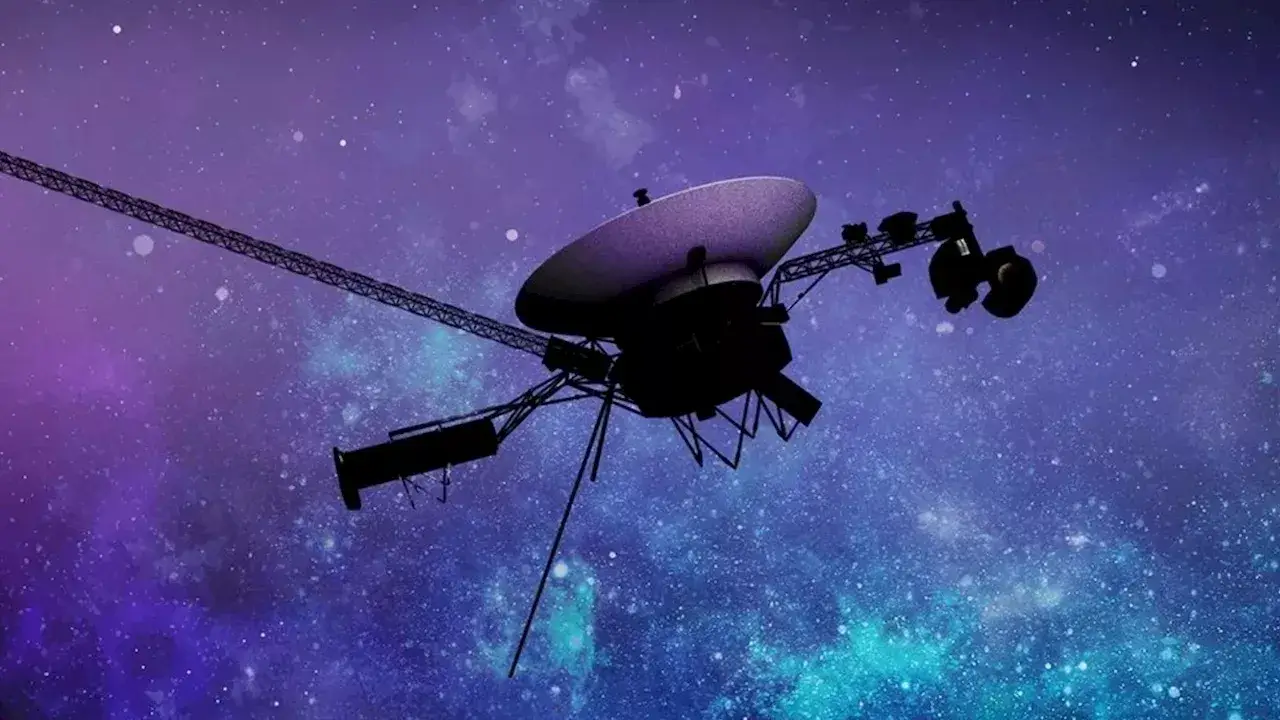
NASA has successfully re-established contact with Voyager 1, the farthest human-made object in space, following a technical anomaly that temporarily severed communication links. The agency detected the probe's signal returning on October 20, ending a period of silence that began after the spacecraft missed two scheduled communications attempts on October 18 and 19.
The loss of contact was directly caused by a thruster anomaly in which one group of thrusters went offline. This failure prompted an automatic switch to backup thrusters, a safety protocol designed to maintain the spacecraft's orientation and stability when primary systems fail. According to NASA, this event marks the first time the nearly 50-year-old spacecraft has behaved in this specific manner.
While contact has been re-established, engineers at NASA’s Jet Propulsion Laboratory are currently investigating what triggered the malfunction. The agency described the incident as a unique occurrence in the mission's history, with teams working to determine the root cause of the thruster failure. Kareem Badaruddin, Voyager mission manager at NASA’s Jet Propulsion Laboratory, stated that engineers are relieved to be back in contact and eager to understand what happened during the anomaly.
One Light-Day Milestone Approaches
The technical incident occurs just weeks before Voyager 1 reaches a significant distance milestone from Earth. The spacecraft is currently approximately 16 billion miles away and is on track to become the first human-made object to reach a distance of one light-day from Earth.
This historic milestone is scheduled for November 18, 2026. At that point, Voyager 1 will be roughly 16.094 billion miles from our planet. The vast distance means that radio signals sent from Earth to the spacecraft, and vice versa, will take a full 24 hours to travel in either direction.
The approaching milestone highlights the extreme isolation of the probe as it continues its journey through interstellar space. The communication delay underscores the logistical challenges faced by mission controllers managing a spacecraft that is effectively a day's travel away from real-time interaction. As the probe moves further into the void, the time lag for commands and data returns will only increase, requiring precise planning for all future operations.
Power Decay Drives Operational Adjustments
Voyager 1 faces ongoing operational challenges due to its age and the decay of its power source. The spacecraft relies on radioisotope thermoelectric generators that use plutonium to produce electricity. As the plutonium decays, the probe loses approximately four watts of electrical power each year.
To manage these declining energy levels, NASA implemented a power-saving effort in September nicknamed the "Big Bang." This initiative involved shutting down non-essential systems to preserve power for critical instruments and communication equipment. The combination of aging hardware, increasing distance, and the recent thruster anomaly requires careful management by mission engineers as they navigate the probe toward its one-light-day milestone later this year.